
Digital Privacy in 2026: A Practical Security Roadmap
Affiliate Disclosure: Some links in this article are affiliate links. If you purchase through these links, we may earn a commission at no extra cost to you. We only recommend tools we use and trust.
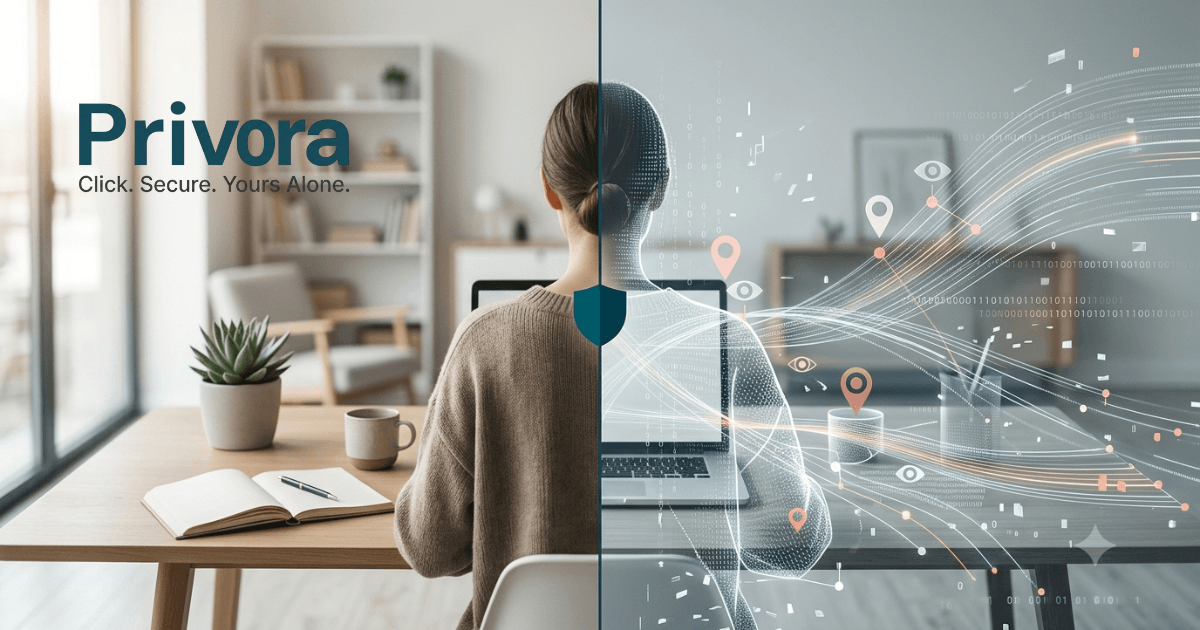
Your phone knows where you sleep. Your browser knows what you fear. Your email provider reads enough to build a psychological profile more accurate than your own self-assessment. This is not science fiction. It is the infrastructure of the internet in 2026.
The good news: meaningful privacy is achievable. Not perfect — perfection is a marketing lie — but meaningfully better than the default most people accept. This roadmap cuts through the noise, skips the panic, and gives you exact steps. No jargon. No 5,000-word threat encyclopaedia. Just what matters, why it matters, and what to do about it.
The Three Threats That Actually Matter
Most privacy advice is overwhelming because it treats every risk as equally urgent. They are not. For the vast majority of people, three categories cover 90% of genuine harm.
1. Behavioural Tracking and Profiling
Every click, scroll, pause, and search is logged, aggregated, and sold. Data brokers like Acxiom and Experian hold profiles on hundreds of millions of people — purchase history, location patterns, inferred health conditions, political leanings. This data fuels targeted advertising, but also insurance pricing, employer screening, and political manipulation.
The Cambridge Analytica scandal was not an anomaly. It was a proof of concept.
What to do: Use a privacy-focused browser, a search engine that does not log queries, and a VPN to mask your traffic from your ISP. See our tool recommendations below.
2. Communications Surveillance
Even in democracies, governments conduct mass collection of metadata — who you contact, when, how often, from where. NSA documents revealed by Edward Snowden showed that metadata alone can map social networks, identify political affiliations, and predict behaviour. Former NSA director Michael Hayden acknowledged in 2014: We kill people based on metadata.
Message content can be encrypted. Metadata usually is not.
What to do: Use end-to-end encrypted messaging for sensitive conversations. Switch to an email provider that encrypts by default and cannot read your messages.
3. Account Compromise and Identity Theft
Weak passwords, reused across dozens of sites, are the single biggest preventable privacy failure. One breach — and breaches are daily — cascades into every account sharing that password. Two-factor authentication helps, but SMS-based 2FA is vulnerable to SIM swapping.
What to do: Use a password manager with unique, strong passwords for every account. Enable hardware or app-based 2FA everywhere possible.
Your Privacy Stack — What We Recommend
The following tools form a coherent, integrated system. They are not the only options, but they are the ones we have evaluated against a strict criteria: Swiss or EU jurisdiction, independent security audits, open-source code where possible, and no surveillance-based business model.

Secure Communications: Proton Mail
Most email is postcards, not letters. Gmail, Outlook, Yahoo — they scan, analyse, and monetise your messages. Proton Mail is different. Built by scientists at CERN, headquartered in Switzerland, it uses end-to-end encryption so that not even Proton can read your emails.
- Swiss privacy laws: Stronger than EU GDPR for data protection
- Zero-access encryption: Your emails are encrypted on Proton’s servers; they hold the keys to nothing
- Open source: Auditable code, not trust-us promises
- Custom domains, aliases, and catch-all: Full professional email control

Anonymous Browsing: Proton VPN
Your ISP sees every site you visit. On public Wi-Fi, anyone on the same network can intercept unencrypted traffic. A VPN encrypts your connection and routes it through a server in a jurisdiction of your choice.
Proton VPN is built by the same team behind Proton Mail, with the same principles:
- Swiss-based, no-logs policy: Independently audited
- Secure Core architecture: Traffic routes through privacy-friendly countries before exiting
- NetShield ad-blocker: Built-in tracker and malware blocking
- Open-source apps: Transparent, auditable

Encrypted Cloud Storage: Proton Drive
Cloud storage is convenient. It is also a privacy risk — your files sit on someone else’s server, often unencrypted, subject to their terms and government requests. Proton Drive encrypts files end-to-end before they leave your device.
- Zero-knowledge encryption: Proton cannot access your files
- Swiss jurisdiction: Outside US and EU surveillance agreements
- Share securely: Encrypted sharing links with password protection and expiry

Password Management: Proton Pass
Reusing passwords is the privacy equivalent of leaving your front door key under the mat. Proton Pass generates, stores, and autofills unique, strong passwords — encrypted so only you can access them.
- End-to-end encrypted: Your vault is unreadable to anyone else
- Integrated alias system: Hide your real email from every service
- Open source and audited: Transparent security
The Setup — From Zero to Secure in One Hour
You do not need a weekend. You need an hour and a checklist.
1 Switch Your Browser (5 minutes)
Install Firefox or Brave. Enable strict tracking protection. Set DuckDuckGo as default search. Log out of Google. Delete Chrome if you are feeling decisive.
2 Secure Your Email (15 minutes)
Sign up for Proton Mail. Set up email forwarding from your old address. Import contacts. Enable two-factor authentication. Create a recovery phrase and store it offline.
3 Install Proton VPN (10 minutes)
Download the app for your devices. Enable NetShield. Connect to a nearby server. Test at dnsleaktest.com to confirm your IP is masked.
4 Migrate Passwords (20 minutes)
Export passwords from your current browser or manager. Import into Proton Pass. Audit for duplicates and weak passwords. Enable 2FA on your most critical accounts.
5 Move Key Files to Proton Drive (10 minutes)
Upload documents, photos, and backups. Organise into folders. Set sharing permissions. Enable two-factor authentication.
Total time: 60 minutes. Total privacy improvement: transformative.
The “Am I Secure?” Checklist
Print this. Tick it monthly.
Frequently Asked Questions
Is perfect privacy possible?
No. The surveillance economy is deeply embedded. But meaningful privacy — reducing your exposure by 80–90% — is absolutely achievable with the tools above.
Does incognito mode protect me?
No. Incognito only prevents your browser from storing local history. Your ISP, employer, and every website still see your activity. Use a VPN and privacy browser for real protection.
Why Swiss jurisdiction matters
Switzerland has some of the world’s strongest privacy laws. It is outside the EU, outside the Five Eyes intelligence alliance, and has a constitutional right to privacy. Proton’s servers are physically located in Switzerland and other privacy-friendly countries.
Can I trust Proton?
Trust but verify. Proton’s code is open source, independently audited, and their no-logs policy has been tested in court. They publish transparency reports. That is more verifiability than any Big Tech alternative offers.
What about free alternatives?
Free services usually monetise your data. Proton offers free tiers, but their business model is subscriptions — not surveillance. We recommend paid plans for full feature sets and to support privacy-first infrastructure.
Conclusion — Start With One Change
Privacy is not a destination. It is a practice. You do not need to overhaul your digital life today. You need to start.
Pick one tool. Proton Mail is the highest-impact first step — email is the skeleton key to every other account. Secure it, then build outward.
The surveillance economy was built by design. It can be resisted by design, too. One account, one password, one encrypted message at a time.
Free to begin. Swiss-grade protection from day one.
